October 31, 2012

"A clear example of child abuse."

It's not just the religion that provides the basis for hatred of Israel in the Islamic world, but also the way the religious hatred is spread, starting with the indoctrination of children. How else to account for the following video, from MEMRI, seen on Egyptian TV:


Some will say that Israel is equivalent, with nasty settlers who control Israel. Like this?

Where are the videos of Israeli children preaching on state controlled television a religious call for Muslims or others to be destroyed? These Arab children call for genocide.

Indoctrination spreads into education. It is commonplace, not just in Egypt, but throughout the Arab and Muslim world. Hillary Clinton, addressing the antisemitism in Palestinian textbooks and education as a senator several years ago, defined what occurs, encouragement to see martyrdom and armed struggle and the murder of innocent people as ideals to strive for, as "a clear example of child abuse."


Senator Clinton said:
These textbooks do not give Palestinian children an education; they give them an indoctrination. When we viewed this report in combination with other media that these children are exposed to, we see a larger picture that is disturbing. It is disturbing on a human level, it is disturbing to me as a mother, it is disturbing to me as a United States Senator, because it basically, profoundly poisons the minds of these children. Hate has no place in the curriculum of schools, and the glorification of violence has no place in the education of children.
One example Clinton mentioned was "portrayal of the region in both maps and text in which Israel does not exist." Abbas, the leader of the Palestinians, does this, too.
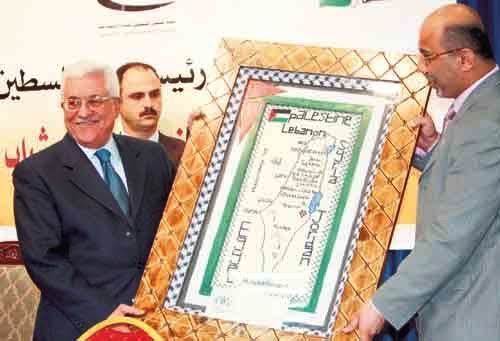

The next video created by Elder of Ziyon, called "Peace" - Palestinian Style, helps to show how deep this view appears ingrained in Palestinian society.


So, the question again arises: Do Palestinians really want a state, to live in peace, or is their goal a state to continue to pursue the destruction of Israel and subjugation or eradication of Jews?

October 29, 2012

To my friends and others who say...

the basis of animosity toward Israel and Jews by Arabs and Muslims is not religion, but the settlements and occupation, I offer the following video clip from several days ago showing Egyptian President Morsi of Muslim Brotherhood fame entranced in prayer.


This stuff is standard fare for anyone that cares to look. What puzzles me is why it seems that hard to recognize what is perfectly apparent?

September 13, 2012

Ayaan Hirsi Ali on the Philosophy of Islam

While looking for information about human slavery, I came across this 2010 video of Ayaan Hirsi Ali, who I find a true hero. For anyone who happens across this post, I think it's worth an hour to listen to her talk and Q & A below, or follow the link above and to learn more elsewhere. She is a fearless fighter to protect women's rights against the oppressive power of religious dogma, and a relativism in society that fears to judge any culture lest it be considered intolerant. She provides insight and substance that many simply do not know. Her contribution is important and her views appropriately part of any rational discussion of human rights and Islam.


Ali concludes that we must fight with ideas to show Muslims there are alternatives, yet so many seem afraid to allow alternative ideas to be raised or examined? Or they practice self-censorship? If we are really so smart, why is it so difficult to acknowledge the obvious dichotomy she explains?

And if you don't have the hour, then take several minutes and watch this:

August 28, 2012

The "Pro-Palestinians"

It has been suggested that I should be adding to the debate more by writing, but I see most of what is written is a repeat of different noise. Not to mention the too frequent refusal to hear what others are saying. So deeply are imbued the partisans and activists who populate the blogoshpere. I am considering if it would just not be more noise.
  
I just finished reading a good piece over at Gatestone, The "Pro-Palestinians", that helps crystalize the mind set of some people that are truly obsessed, but not in a positive way. The author, Hisham Jarallah, is a journalist based in the West Bank. He says, in part:
Once again, it has been exposed that Americans and Europeans who claim to be pro-Palestinian are actually just Israel-haters. These activists seem to have a problem only with Israel. For them, the Palestinian issue is just a vehicle for vomiting their hatred toward Israel, and most likely all Jews. They are your grandmother's recycled anti-Semites.
For most of these international activists, Palestinian leaders such as Mahmoud Abbas and Salam Fayyad are "traitors" because they say they believe in the two-state solution and conduct security cooperation with Israel.
These activists are on the side of the radicals in the Palestinian camp. They are closer to Hamas and Islamic Jihad than to moderate Arabs and Muslims. The Palestinians do not want support from Westerners who pretend to be more Palestinian than the Palestinians.
The Palestinians need support from people who promote democracy, moderation, accountability and coexistence with Israel. It is time that the "pro-Palestinian" activists leave the Palestinians alone and search for another cause to advance their messages of hate and violence. (Emphasis added.)
With so much human suffering and immediate wrongs occurring in the world today, in violation of humanitarian principles, the question is raised why it matters so much for some to negatively obsess over the only Jewish state while turning a blind eye elsewhere, where real crimes against humanity are taking place. How are they unable to see the discriminatory result in such action, that the effect of it is antisemitic? One can hope that time will reveal how short-sighted and misguided some folks were in the case of advocating against Israel by assisting factions that want to eliminate Jews and even themselves.

It's time to leave the Palestinians alone. But if I was another cause, I might have trepidation.

June 21, 2012

Western Muslims and the Voice of Egyptian Voters

Was over reading FrontPage Magazine this morning. To some people that I have communicated with, this alone defines me as a neocon of the highest order. No less than the abusers in the neocon crowd, these definers look for ways to tear down the people they disagree with, instead of their ideas. This personalization is a significant factor of why people get so divided over ideas.

Anyway, I read FrontPage AND Daily Kos. So what does that mean? That I am not afraid of different sources and ideas, but need them all to help develop my own thoughts. I am wary of the echo chamber, especially when the issue is controversial. Indeed, how is it possible to make an intelligent decision without consideration of competing views? Deliberative discourse is the food of an informed citizenry and democracy. Except to the partisan that could actually care less. More important to them is winning and imposing ideology.

All of this leads me to an essay by Nonie Darwish about the election in Egypt and Muslims in the West. Born in Egypt, Darwish is an Egyptian-American, the daughter of an Egyptian Army Lieutenant General, Mustafa Hafez, assassinated by the Israeli army in 1956. Her father was sent by Gamal Abdel Nasser to serve as commander of the Egyptian Army Intelligence in Gaza, then under supervision of Egypt, and he founded the fedayeen who launched raids across Israel’s southern border, killing some 400 Israelis between 1951 and 1956. During his speech announcing the nationalization of the Suez Canal, Nasser vowed that all of Egypt would take revenge for Hafez’s death. More about Darwish can be found here

Darwish noted that half of the voters in Egypt voted against the Islamist Muslim Brotherhood and Sharia, while Egyptian voters in the USA supported the Islamist agenda in far greater percentages, perhaps even 95%. She finds that these voters in the USA are more radical than the Egyptian populace overall.

As to those who live in societies where there is relative freedom, Darwish raises a larger point:
Muslim immigrants to the West have, in general, rejected taking the hard role of positively changing their countries of origin and inspiring them with new ideas of freedom, democracy and human rights. Instead, Muslims in America have focused on building mosques with aid from Saudi Arabia rather than protesting against Iran’s execution of apostates and stoning of women. They have focused on defending and lying about Sharia in America rather than teaching values of life liberty and pursuit of happiness to their countrymen. They have focused on a message of anti-Semitism, blaming America and holding Israel apartheid weeks, rather than on assimilating in America, initiating peace dialogue or holding an olive branch out to Jewish students.
Contrary to logic and to the brotherhood of all humans and cultures, American Muslim groups have maintained the same high levels of hate, anger and victim mentality that exists in many areas of the Muslim world. And now Muslim Egyptians in the West have not only ignored the welfare of the 50% Egyptians who do not want to live under Sharia, but have also ignored the reasonable fears from Islam by the American public and instead insulted them as racists and “Islamophobes.”
Why are there so few Arabs and Muslims that speak out in favor of Western values and advocate adoption in their countries? Who better to address the issues than members of a group? Because of their position, they could have profound influence in helping to bring progress, democracy and peace, both at home and internationally, using a realistic approach to existing, intractable problems, and offering positive alternatives based on principles of human dignity and self-determination.

I hope that more voices like Darwish, Ayaan Hirsi Ali, Simon Deng and the "Son of Hamas" are heard, unafraid to be truthful and self-critical. So far there are just a handful of individuals, and they are often shunned, but I think they offer our best chance.

June 20, 2012

The "Son of Hamas" and "Ijtihad"

Mosab Hassan Yousef is the eldest son of Sheikh Hassan Yousef, one of the founders of Hamas. He spent his early years as a Hamas activist. He then became a spy for Shin Bet (Israel Security Agency) and helped prevent dozens of terrorist attacks during the second intifada, saving hundreds of Israeli lives.

Now, Yousef is planning a movie depicting the life of Muhammad, Islam’s holiest prophet. He insists that the film will be faithful to Muslim texts, an historical depiction of Muhammad’s life as told through Ibn Ishaq, an Arab historian from the eighth century who is believed to be one of the most reliable biographers of the prophet. He notes that scholars and others examine the lives of many figures of history, but Muhammad is somehow off limits to discuss or even depict in a simple cartoon.

I hope you watch the video below because it speaks for itself, and read the news article from which it came.


Yousef is engaging in ijtihad, the exercise of critical thinking and independent judgment. Such behavior was once the norm in Islam, but became impermissible as the ideology became more authoritarian, until Muslim scholars decided that, as all questions had been addressed, there was no longer any need to debate new issues that arose or to accept differing views, differing conclusions and differing sorts of influences that arose as part of the cultures of its large empire.

Harold Rhode has explained the evolution in his latest essay, Can Muslims Reopen the Gates of Ijtihad? He puts the matter in context:
The Chinese peasants who went to work as laborers for the British in Singapore in the 19th century managed to produce the economic marvel that Singapore is today. Similarly, South Korea went from a semi-medieval kingdom 50 years ago to the tenth largest economy in the world. The Muslims of Aden in southern Arabia, however, lived under British rule, like the Singaporeans, yet they remain as underdeveloped as their neighbors who never lived under foreign domination. Singapore's Lee Kuan Yu, for example, once asked a well-known scholar of Islam, "Why is it that whatever we do to help our Muslims advance fails? We provide them with educational opportunities, give them financial incentives, and so on, but nothing works. They still remain at the bottom. Why?"
In any event, I commend the "Son of Hamas" and wish him well in his venture to engage in ijtihad, not to mention all the other brave folks that seek to to express themselves freely -- without fear of reprisal, rather than merely follow the forces which now control Islam

I further commend Rhode's essay, especially to those who care to better understand the state of modern Islam and how it may become as it used to be, a center of science, creativity and tolerance.

June 2, 2012

Existential Questions Facing the Muslim World

I never had a distinct awareness of Harold Rhode until I read Existential Questions Facing the Muslim World, his recent article at Gatestone Institute

Rather than getting into a debate over who he is, as many prefer to do, perhaps a better route is to examine what he says. You need not agree with the substance, but in my mind there is certainly value to look at different sides of the issues, particularly when they are controversial in scope.

The article begins:
Many parts of the world, such as Korea, China, and India - basically medieval kingdoms fifty or sixty years ago -- are now among the pacesetters of the modern world, both producing, and improving on, existing inventions. The Muslim world, however, often better off than these countries just half a century ago, has remained as it was, or has even, in many instances, deteriorated.

This inertia in the Islamic world seems to stem not from any genetic limitations, or even religious ones, but purely from Islamic culture.

Although one can gain some insight into Islamic culture from books and other written material, if one is to really understand the Muslim world, there is no substitute for sitting in coffee or tea houses, spending time with Muslims, and asking them questions in their own surroundings and in their own languages. A result of these approaches would seem to indicate, with respect, some of the factors citizens of the Arab and Muslim world might wish to consider to use their extraordinary talents even more fully:
Whether anyone reading here wishes to delve into the factors with Rhodes is a personal choice. The topics he addresses are:
  • The Ability to Question
  • The Role of the Individual vs. the Role of the Group
  • Encouraging Creativity
  • The Ability to Admit Failure and Learn from It
  • The Learning Process
  • Taking Responsibility for One's Actions
  • How Information Is Passed On To Others
  • The Western Concept of Compromise
  • The Western Concept of Peace
  • Book Publishing
  • The Status of Women
  • The Oil Curse
He concludes with reference to Palestinians and Jews:
Palestinians, as well, are easily capable of accomplishing what anyone else does, if only their education, governance and cultural incentives were changed from destroying their neighbor, Israel, to building a felicitous society. Palestinian political leaders, however, seem to have decided that the rewards from the international community, at least for them, will be greater if they are seen as victims receiving perpetual handouts, rather than as leaders receiving rewards linked to accomplishments. The economic system seems to have evolved into bribes in exchange for promises that are never kept, followed later by the request for still more bribes.
Ironically, all genetic analyses of the many ancient Muslim Palestinian families indicate that they are largely from the same genetic stock as Ashkenazi Jewry. [...] So what is the difference here? The Jewish culture encourages questioning and thinking from an early age, whereas the Palestinian Muslim culture does not. What is encouraged instead is the unexamined acceptance of whatever is set before one, whether on government-run television or in government-written textbooks. Religion has nothing to do with this situation; Islam therefore is not the problem: Islamic culture is. Only when Muslims address their culture head-on can there be any real hope for their world to overcome its self-imposed limitations and start fully contributing to the wonders of the 21st century.
I suggest the article is both informative and thought provoking, and worth a full read, no matter one's persuasion, including those who habitually reject most anything uttered by political adversaries, and will leave it at that.

May 21, 2012

David Littman has died.

I never heard of David Littman before I started to learn about human rights, and then as it connects to Israel and an international "cooperation" that holds the only Jewish state to a standard of perfection different from any other state. This phenomenon is seen best at the United Nations, and particularly the Human Rights Council. Littman served as representative of the World Union for Progressive Judaism in Geneva, where the HRC meets. I first saw him excoriate the HRC in no uncertain terms for hypocrisy in promoting political rather than humanitarian concerns. Here is an illustration:


He spoke out repeatedly and appropriately, and here he explained his recent activities promoting human rights at the HRC:


I learned what an extraordinary life this man lived. That his wife, Gisele, writes under the pen name Bat Ye'or about the status of Jews and Christians in Muslim lands and authored Eurabia. How many that condemn this book have read it?

I learned later that in 1961 he helped rescue of 530 Moroccan-Jewish children in a secret Mossad mission, posing as a tennis-playing, Christian English gentleman living with his wife and baby in Casablanca. The details of "Operation Mural" only came to light when a documentary was made in 1986.


For his service, Littman was conferred the "Hero of Silence" Order by the Israeli government in 2009.

To me, Littman defines what it means to be a liberal Zionist. This liberal is not opposed to the nation state because it is the mechanism for which self-determination and human rights are most optimally obtained by peoples and individuals. This liberal speaks against violations of human rights by using a single 21st Century standard of universality as a point of departure, based on principles of individual liberty and dignity that states and non-state entities must respect, protect and fulfill, free from discrimination. Rights do not include freedom not to be insulted, or protection of ideology, or freedom to destroy the system on which the rights are secured. This liberal believes that the worst violations that involve the most people and suffering deserve the spotlight of action and attention. There are limited resources overall for implement and enhance human rights protection.

Littman knew all this only too well. The world is less because he represents too few, and this post is, among many, a small testament to his accomplishments to better humankind.

I hope you will take the opportunity to learn more about this champion of human rights for all, but especially those most vulnerable with the least voice.

May 11, 2012

This is "Islamophobia"

You see, it's all in the head, this claim about Muslim hatred of Jews. If it does exist, it's just a few, extremists, which does not include the Muslim Brotherhood, which is moderate and meets with our government officials.

Pro-Israel advocates, Israel, the Jewish people are in fantasy land. There is nothing to be concerned about.


Indeed, the above is a simply a figment of the imagination or a Zionist deception and existential threat against 1.5 billion adherents of Islam.

So it goes.

May 9, 2012

A World Divided Between the Antagonistic Right and Left

As of late, there is little desire or inclination to blog about much of anything. Does all the energy I see expended in the blogosphere even matter when it comes to making change? There exists a proliferation of posts, to be sure, that day after day cover the same old things, adding to the white noise. Does it accomplish anything of substance?

A problem in blogging is the need to imagine every insight is unique and indispensable. Nothing could be further from reality. To read, think, reflect and learn is more personally satisfying than trying to knock heads with others that do not care for any views besides their own, mockingly so, based on narrow agendas, paying lip service to toleration of others, yet adopting the fundamental approach of us versus them.

All of which brings me to this post. Peter A. Joseph is chairman of the Israel Policy Forum, a think tank that supports responsible U.S. diplomacy to achieve a sustainable, negotiated two-state solution to the Arab-Israeli conflict. Joseph wrote an op-ed a couple of days ago that captures some of what I've expressed above. His subject matter was the boundaries dividing American Jewish opinion on Israel, and its policies regarding Palestinians. He says:
In truth, American Jewish advocacy, like Israel’s political realities, is complex and cannot be addressed effectively through sound bites. But that is exactly what voices on the fringes have offered as their efforts have been directed at rallying political bases rather than advancing reasoned policy concepts. Instead of staking out principled, nuanced positions that reflect an understanding of competing narratives, both sides have adopted an oversimplified rhetoric that feeds fierce debate in the American Jewish community and shrinks political space for pragmatic policy.
Ironically, while the American Jewish left is more vocal than ever, it also has become more irrelevant. While correctly promoting the idea that there is not only one way to be pro-Israel, the left has joined with the right to fuel a with-us-or-against-us paradigm that has resulted in the highly charged debate. The left’s vocal and consistent condemnation of the Israeli government, as well as its lack of sensitivity to Israeli public opinion, has significantly undermined its pro-Israel claims. Consequently, it has never been more politically expedient for politicians and community leaders to disassociate from liberal Zionists.
The American Jewish right shares equal blame. It has sought to capitalize on the left’s failings, seeking to turn Israel into a partisan tool that can be wielded against President Obama and undermining bipartisan consensus support for the Jewish state. Faced with a choice, many organizations, community leaders and politicians quite naturally align themselves with the right, lest they risk alienation from a comfort zone of support for Israel. Others are disengaging from Israel advocacy altogether to avoid the seemingly endless debates that often resemble a dog chasing its own tail.
Similar divides extend into political discourse between activists. This helps illustrate why knowledge and durable solutions often are beyond grasp of activists. So long as the divisive mind set predominates, which denies the existence of any other truth besides one's own, the path to obtain a secure environment where humans take precedence over ideologies will be much longer and rockier than might otherwise be experienced.